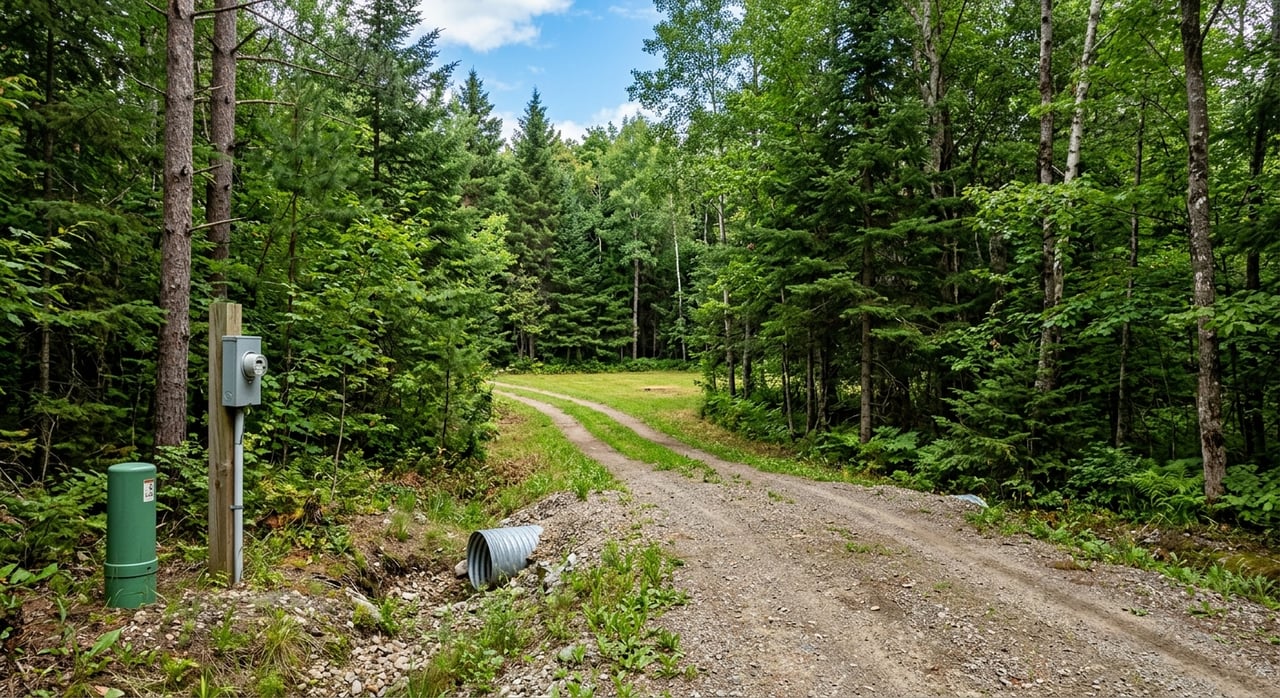
If you are dreaming about a hunting base camp, a future cabin site, or simply a place to get away in the woods, buying recreational land near Laporte can feel exciting and a little overwhelming. Northern Minnesota parcels often come with questions that do not show up in a standard in-town home search, especially around access, shoreland rules, septic systems, and public versus private land. The good news is that with the right research, you can avoid surprises and buy with confidence. Let’s dive in.
Why due diligence matters near Laporte
Recreational land can look simple at first glance, but the details matter. A parcel may appear perfect for camping, hunting, or building until you learn there are access issues, permit requirements, or shoreland restrictions that affect your plans.
In Hubbard County, Environmental Services is the local office that handles shoreland management, subdivision, subsurface sewage treatment systems, buffers, sign regulation, adult-use regulation, and E911. That same office also issues permits, processes variances and conditional use applications, inspects sewage treatment systems, and maintains the county tax parcel map.
For buyers near Laporte, that means your research should start with local sources, not assumptions. A good land purchase usually begins by confirming what the parcel is, what is allowed, and what it will take to use it the way you want.
Start with Hubbard County parcel data
One of the smartest first steps is reviewing the Hubbard County GIS hub. The county identifies it as the official and authoritative source for parcel, road, land-record, property-tax, assessment, and address data.
For recreational land, this helps you answer basic but important questions. You can begin checking parcel shape, road frontage, nearby roads, address information, and whether there are easement notes tied to the land.
Map research is a great starting point, but it should not be your only step. If boundaries, access, or public land lines are important to your purchase, you will want to verify those details further before closing.
Check access before you fall in love
A beautiful parcel is much less useful if getting to it is complicated. Legal road access is one of the first things you should confirm when buying recreational land near Laporte.
If your plans include adding a new driveway or entrance from a Hubbard County road, the county requires a driveway and entrance permit before construction begins. Hubbard County lists a $300 non-refundable fee for that permit.
If utility lines need to cross the county road right-of-way, a separate utility permit may also be required. The county lists a $100 fee for that permit.
Access questions to ask early
- Does the parcel have legal road access today?
- Is there an existing entrance, or will you need to build one?
- Is the road county-maintained, private, or seasonal?
- Are there easements that affect how you can reach or use the land?
- Will your plans require a driveway or utility permit?
These questions are easier to answer before you buy than after you close.
Understand boundaries and nearby public land
Many buyers near Laporte want land for hunting, trail use, or privacy. In those cases, understanding the relationship between your parcel and nearby public land is especially important.
The Minnesota DNR recommends using detailed maps to determine whether land is public or private. It also notes that county plat books and Recreation Compass can help buyers search by place name, Public Land Survey, and coordinates.
At the same time, the DNR cautions that public-land boundary data are general and should be verified with boundary signs and local offices. In plain terms, map layers are useful, but they are not the final word on legal boundaries or where you should travel.
Why public land nearby can be a plus and a caution
Public land can add recreation options, hunting access, and open space around your property. It can also affect how busy an area feels during hunting seasons or other peak recreation times.
For hunting-focused buyers, the DNR notes that common public hunting lands include wildlife management areas, state forests, national forests, and waterfowl production areas. It also points out that many northern counties manage tax-forfeited lands and that buyers should check with the local county land department for maps of county lands open to hunting.
Hubbard County also states that its tax-forfeited lands are limited for motorized travel. Vehicles are allowed only on forest roads or trails signed open to that type of use.
Wells and septic can shape the whole purchase
In rural Minnesota, utilities often look very different from what you might expect in town. A recreational parcel may have a private well, a septic system, both, or neither.
This matters because your plans for camping, a cabin, or longer stays may depend on water and wastewater systems that meet local requirements. It also affects your budget, since installing or upgrading these systems can be a major cost.
The Minnesota Department of Health says private wells are the main source of drinking water for three out of four Minnesotans. It also advises well owners to test water regularly, including coliform bacteria every year, nitrate every other year, arsenic and lead at least once, and manganese before a baby drinks the water.
The department also notes that well construction and sealing are regulated, wells must meet isolation distances, and unused wells generally must be properly sealed by a licensed well contractor. If a parcel has an older well, you will want to know its status before moving forward.
For septic systems, the Minnesota Pollution Control Agency says state rules are implemented locally, and local ordinances can be stricter than state minimums. In Hubbard County, Environmental Services administers the subsurface sewage treatment system ordinance and inspects sewage treatment systems.
Utility questions worth asking
- Is there an existing well on the property?
- Has the well water been tested, and when?
- Is there an existing septic system?
- When was the septic system last inspected or upgraded?
- Are there county records related to zoning, septic, or permits?
- If no systems exist, what will it likely take to add them?
Shoreland rules matter sooner than many buyers think
If the parcel is near a lake or river, shoreland rules should be one of your first checkpoints. In Hubbard County, the shoreland ordinance applies within 1,000 feet of a classified lake or 500 feet of a classified river.
If any part of a proposed structure falls within shoreland jurisdiction, a land use permit is required. The county also requires permits for sewage disposal systems, grading and filling, and signs in shoreland areas before work begins.
This can affect more than a future cabin. It may also shape where you place outbuildings, how you handle shoreline work, and what site changes are allowed.
Improvement planning for shoreland parcels
A practical plan usually starts with the basics:
- Confirm shoreland jurisdiction
- Review setbacks and site constraints
- Check permit history
- Understand septic requirements
- Plan access before building improvements
Hubbard County also notes that permits generally expire one year from approval unless extended. That is helpful to know if you are buying now and planning improvements in phases.
Camping and RV use are not always simple
Some buyers assume they can place a camper or RV on recreational land and use it freely without much county review. In Hubbard County, that is not always the case.
Under the county shoreland ordinance, an RV used as a dwelling unit and located on a lot for more than 30 days in a year is treated as a dwelling unit and must have a land use permit. Recreational vehicle camping areas must also be licensed and meet sanitation requirements.
If your vision is a simple seasonal base camp, this is an important issue to clarify early. The intended use of the land can trigger different rules for RVs, septic, and land use.
Think about improvement plans and long-term value
The best recreational land purchases line up with how you actually plan to use the property over time. If you want hunting access, trail use, and a simple camp setup, access and manageability may matter more than raw acreage.
If you are considering future improvements, it often makes sense to solve the most practical questions first. That usually means access, water, wastewater, setbacks, and permits before moving on to cabins, garages, trails, or shoreline work.
For wooded and shoreland parcels, low-conflict improvements are often the smartest long-term move. The DNR’s forest habitat resources connect owners with advice, cost-share programs, and Woodland Stewardship Plans, while the Hubbard County SWCD guide emphasizes preserving native vegetation buffers, avoiding construction within 100 feet of the shoreline, steep slopes, or bluffs, and notes that a high-quality buffer can add resale value.
That kind of planning can help you enjoy the land now while protecting flexibility for the future.
A simple buyer checklist for Laporte-area land
Before you buy recreational land near Laporte, try to answer these questions:
- Is the parcel inside shoreland jurisdiction?
- Are there land use, septic, grading, or shoreland permits on file?
- Does the property have legal road access?
- Will you need a driveway or entrance permit for your plans?
- Is there a well, septic system, or neither?
- When were the well and septic last tested, inspected, or upgraded?
- Will your intended use involve a camper, RV, cabin, or full-time dwelling?
- Are there easements, county roads, public land boundaries, or adjacent tax-forfeited lands that may affect access or privacy?
These are the kinds of details that can change whether a parcel is a great fit or a frustrating one.
If you want local guidance as you compare acreage and recreational properties around Laporte and northern Minnesota, Parker Cermak can help you look at the practical side of each opportunity with clear, local insight.
FAQs
What should you check first when buying recreational land near Laporte, MN?
- Start with Hubbard County parcel data, legal access, boundary questions, shoreland status, and whether the property has a well or septic system.
Does recreational land near Laporte need a driveway permit?
- If you need a new driveway or entrance onto a Hubbard County road, the county requires a driveway and entrance permit before construction begins.
Can you use an RV on recreational land in Hubbard County?
- In Hubbard County, an RV used as a dwelling unit and kept on a lot for more than 30 days in a year is treated as a dwelling unit and requires a land use permit.
How do shoreland rules affect land near lakes and rivers in Hubbard County?
- Hubbard County shoreland rules apply within 1,000 feet of a classified lake or 500 feet of a classified river, and a land use permit is required when part of a proposed structure falls within shoreland jurisdiction.
Why are wells and septic systems important for Laporte-area land buyers?
- Many rural parcels rely on private wells and septic systems, so buyers should confirm whether those systems exist, review inspection or testing history, and understand any local requirements before closing.
How can you tell if land near Laporte borders public hunting land?
- Use Hubbard County GIS data together with Minnesota DNR maps and then verify important public-land boundaries with local offices and boundary signs, since map data are general and not the final word on legal boundaries.